The National Museum of Korea recently surpassed 6.5 million annual visitors. Its ranking as the third most visited museum in the world in a 2025 global museum attendance survey, following the Louvre Museum and the Vatican Museums, is a remarkable milestone. The National Museum of Modern and Contemporary Art, Korea also welcomed 3.37 million visitors last year, while the combined attendance of Korea’s 13 national museums exceeded 10 million. These figures suggest that the growing popularity of museums is no longer a passing trend, but part of a broader cultural shift.
This shift is also visible beyond Korea. Major museums and art institutions around the world are expanding evening hours, developing immersive exhibitions, and strengthening community-based programs to engage audiences more actively. Participatory cultural programs such as Museum Night are also spreading across Europe. Museums are no longer simply places to view exhibitions. They have become spaces of experience, where visitors see, feel, and participate according to their own senses, interests, and needs.
Museums That Open Up a World of Wonder and Transform Our Lives
Why do we go to museums? Some visit to gain knowledge, some to rest, and others to spend time with loved ones. Beneath all these motivations, however, lies a shared desire: the instinctive longing for a better life—in other words, for well-being.
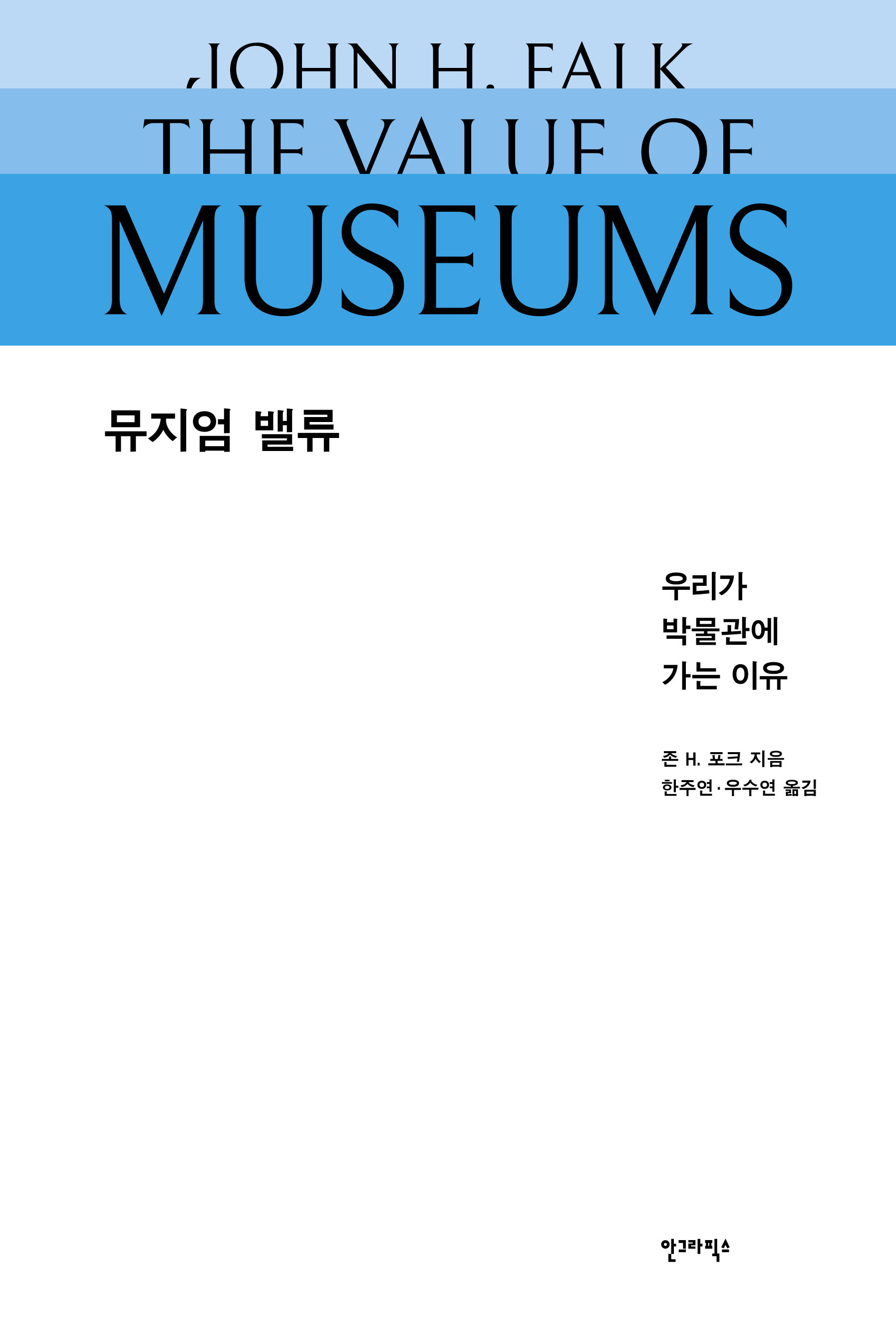
In The Value of Museums, John H. Falk, a leading scholar in the study of museum use and visitor experience, redefines the essence of museums from the perspective of experience. According to Falk, museums are not merely places that display objects and transmit knowledge. They are ecosystems of experience, where visitors encounter objects, ideas, and stories, come to understand themselves and the world anew, and, in the process, discover wonder, calm, and social connection.
The book sees a museum visit not as a one-time event, but as an ongoing process of experience that accumulates within a person’s life and memory. These experiences remain with us, shape our identities, and become a source of enrichment in everyday life. Ultimately, the true value of a museum is not found in the objects behind glass, but in the transformed lives of the people who encounter them.
At a time when many speak of a crisis for museums amid economic uncertainty, the aftermath of the pandemic, and rapidly changing social conditions, Falk nonetheless affirms the enduring value and future potential of museums. As long as humanity’s fundamental desire for well-being remains, the role of museums will not disappear. The question, then, is not whether museums should exist, but how they should exist. Their future depends on how they respond to the changing needs of the public.
From A to Z: Designing Museum Experiences for Well-Being
Across three parts, this book systematically explains how museums can continue to support public well-being while securing their social relevance and long-term sustainability in a changing world.
Part One, “Discovering Value,” examines a long-standing problem: although museums have provided meaningful experiences for the public for generations, their value has not always been clearly defined. Falk reconceptualizes the essence of the museum experience as the enhancement of well-being, organizing it into four interconnected dimensions: personal, intellectual, social, and physical well-being.
Part Two, “Realizing Value,” shows in concrete terms how museum experiences have contributed to these four forms of well-being. Museums have served as places that offer personal milestones, expand learning and understanding, strengthen relationships and a sense of belonging, and ease the stresses of everyday life.
Part Three, “Applying Value,” looks toward the future of museums through this new framework. It explores how the value generated by museum experiences can be measured and communicated, how such value can be used to inform policy and make a stronger case for support, and what principles can guide the design of more immersive and meaningful experiences. In particular, the book demonstrates that the value of museum experiences can be assessed both quantitatively and qualitatively—and even translated into economic terms.
With this book, John H. Falk sets out to answer a question that has long been discussed but never fully resolved: how should we understand the public value of museums? The Value of Museums offers a sophisticated roadmap for building a sustainable and meaningful future through experiences that connect more deeply with the public. It shows how museums can continue to inspire audiences across generations, and how their intangible value can be made visible and convincingly demonstrated.
What we need now is precisely this new perspective. For museum professionals, the book offers renewed confidence in the reason museums exist. For the public, it reveals just how valuable their own museum experiences can be. The Value of Museums will serve as an important new standard for rethinking what museums are—and what they can become.