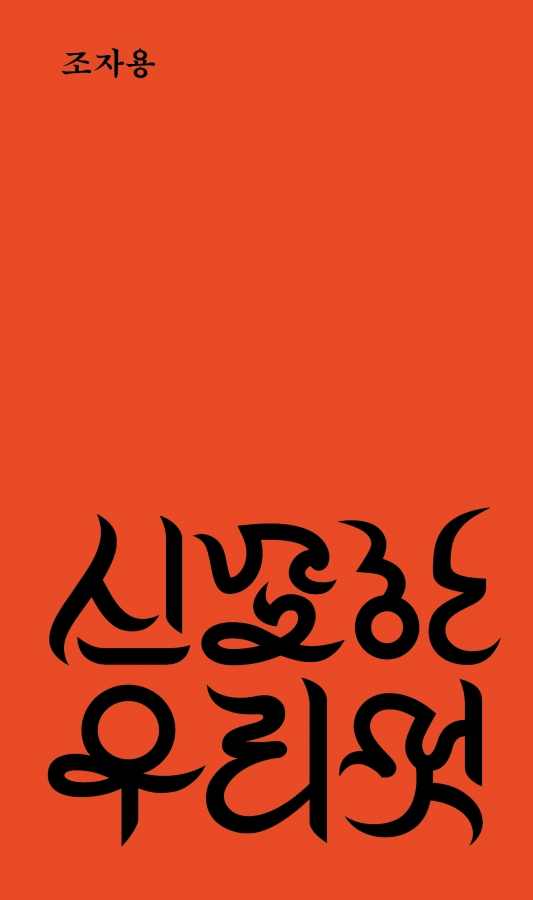
Born in Hwangju, Hwanghae-do, he graduated from Pyongyang Teachers’ College (平壤師範學校) at the age of 18 and briefly worked as an elementary school teacher. After the liberation of Korea, he moved south, worked as a houseboy for the U.S. military, and at 22, went to study in the United States. He graduated from Wesleyan College and Vanderbilt University and earned a master’s degree in Structural Engineering from Harvard University. Returning to Korea in 1954, he pursued a career in architecture while collecting dokkaebi tiles and minhwa (Korean folk paintings). As an architect, he designed notable buildings such as the main buildings of Kyungpook National University in Daegu, Keimyung University, Dongsan Hospital, and the Sejong University Museum. His Habib House, built in the style of a traditional Korean hanok, is the only U.S. ambassador’s residence worldwide constructed in the host country’s architectural style, and it is highly regarded for its beauty. His published works include The Beauty of Korean Folk Painting, The Art of Calligraphy and Painting, and The Arts of Korea and Japan. He also authored English works such as Humour of the Korean Tiger and Spirit of the Korean Tiger, as well as Japanese titles like The Beauty of the Joseon Dynasty and The Heart of Joseon Folk Paintings.
Authors
Zo Za-yong
조자용
다른 사람들
-
Shim Jun is the International Product Manager for Adobe Creative Cloud products. Driven to create intuitive and productive products for global users, she has delivered market-leading products for over 20 years, with a focus on the Chinese, Japanese, and Korean (CJK) markets, with a particular emphasis on Korea.
-
Choi Ji-won
A senior researcher at AG Typography Institute , the designer previously worked at Yoon Design and T-Lab before joining AG Typography Institute, where they led projects such as Jeju Air’s corporate typeface “Flight Sans” and “AG Choi Jeongho Sun Myeongjo.” As an independent type designer , they released “Damjae,” a typeface designed for vertical writing, and collaborated with designer Lee Yongje on the typefaces “Nouvelle” and “Jonjae.” -
Park Hee-won
After studying Living Design and Journalism & Broadcasting at Yonsei University , they worked as a product development MD. Driven by a desire to shape and engage with stories, they transitioned into the world of translation. After completing the publishing translation program at Gulbab Academy , they began working as a translator affiliated with Barun Translation . Their translated works include Vinyl , Ace , The Outlaw Ocean , and A Bookshelf of One’s Own . -
Jan Middendorp
Jan Middendorp is an author, researcher, and designer living in Berlin. He has edited and written books and articles about typography, design and the performing arts; designed printed matter for publishers and non-profit organizations; worked as a consultant and editor to the type world. -
Fujimori Terunobu
Fujimori Terunobu is a Japanese architect and architectural historian. He studied at Tōhoku University before entering graduate school at the University of Tokyo. Whilst writing his thesis in the 1970s Fujimori formed the Architecture Detectives. In this group he and his colleagues searched the city to find and photograph early Western-style buildings. During the 1970s and 1980s he made studies of the city about early Western buildings and unusual occurrences, and did not turn to architecture … -
Lee Yong-je
Lee Yong-je studied visual design at Hongik University and was the first designer to receive a PhD in Hangul design from the same graduate school. He worked at the Hangeul Design Institute from 1999-2003, and since 2004, he has been running ‘Hangeul Space’, a space for research and design. He has designed numerous fonts, including ‘꽃길’, a font for vertical writing, and ‘아리따’, a typeface for Amorepacific. Recently, he has been focusing on ‘ink-saving … -
Lee Jeong-hwan
Lee Jeong-hwan graduated from Kyung Hee University’s Department of Business Administration and Intercultural Japanese Language School. He is a researcher of Eastern philosophy and religion, a Japanese translator, and a writer. He has translated many books into Korean, including The Architecture of Tomorrow , The Secret of the Macaroni Hole , Connecting Architecture , 三低主 , White , Nagaoka Kenmei no Kangae , Tokyo University Students Become Fools , and Ready Luck . -
Edo Smitshuijzen
정부와 기업 클라이언트를 대상으로 다수의 중요한 대규모 아이덴티티 및 사이니지 프로젝트에서 디자인 책임자로 일했다. 그의 디자인 작업은 네덜란드 그래픽 디자인의 독특한 위상 정립에 일조한 바 있다. 저자가 개발한 기능별 종합 사이니지 패널 시스템은 디자인 클래식으로 자리 잡았고 지난 23년간 전 세계 시장에서 판매되었다. -
Amorepacific
Amorepacific Corporation is a South Korean beauty and cosmetics chaebol, operating more than 30 beauty, personal care, and health brands. The firm was founded in 1945 by Sungwhan Suh and currently managed by Kyungbae Suh, the son of the founder. It is the largest cosmetics company in South Korea and one of the 10 largest cosmetics companies in the world. -
Kim Sun-nyeo
Pen name Kim Sia. Université Sorbonne Nouvelle, Paris-III is a PhD candidate in French Modern Literature under the supervision of Prof. Serge Martin. She is also a writer on picture book criticism and European special education. -
Shin Myung-ho
Researches the history of visual expression and representational theory, with a focus on picture books, and teaches Studies of Culture and Representation at Musashino Art University in Japan. Engages in various activities such as exhibition planning and translation, striving to raise awareness of the role and impact of picture books in society. -
Min Gu-hong
He studied literature and linguistics at Chung-Ang University and computer programming—though he prefers to call it “narrow-sense literature and linguistics” or “poetic computation”—at the School for Poetic Computation (SFPC) . He worked as an editor, designer, and programmer at Angraphics and Workroom. Now running his one-person company Min Guhong Manufacturing , he works both within and beyond the art and design fields. Meanwhile, through “New Order” , which bills itself as “a liberal arts …