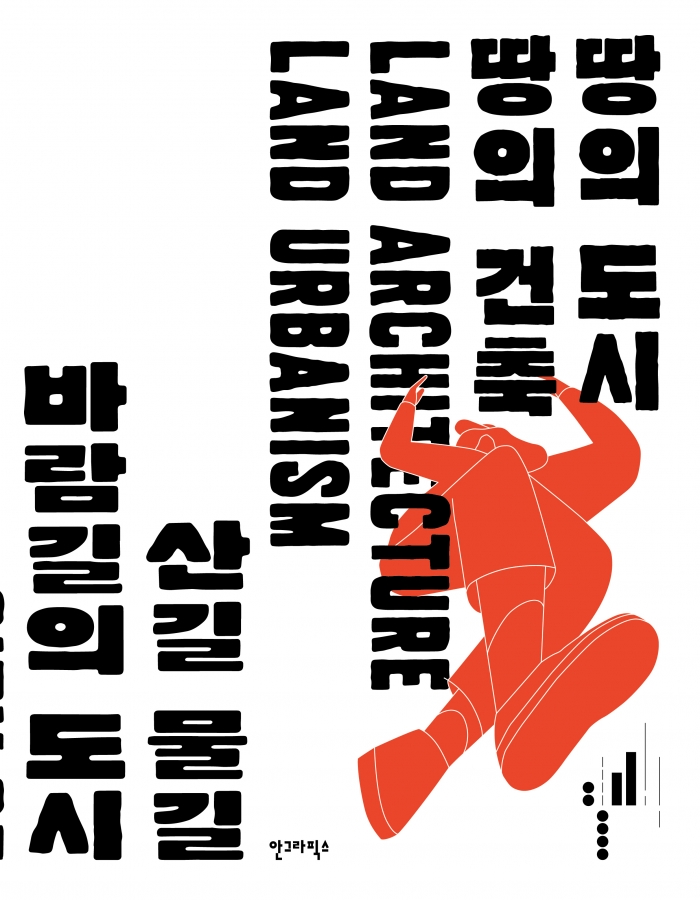
Established in 2017, the Seoul Biennale of Architecture and Urbanism explores the diverse challenges arising from rapid urban growth through the lens of architecture and urbanism. With a focus on Seoul and other global cities, the Biennale seeks to address pressing urban issues and propose innovative solutions. The Biennale features Thematic Exhibitions centered on a specific theme, Guest Cities Exhibition showcasing pioneering public projects from around the globe, and On-site Projects that bring the theme to life. Additionally, the Biennale directs participatory programs such as Global Studios and educational workshops, providing a collaborative space where experts, government agencies, and members of the community can all come together to envision the future of Seoul.
Authors
Seoul Biennale of Architecture and Urbanism
서울도시건축비엔날레
다른 사람들
-
Lee Jung-kuk graduated from Yonsei University’s Graduate School of Education, and attended the Emerson College Waldorf Teacher Training Program and the Visual Arts Program in the UK.
-
Shin Hyun-woo
A digital culture researcher specializing in critiques of information capitalism, game studies, and technology and information culture. Actively engaged in various writing projects. Co-authored the book Mario, Born in 1981. -
Ando Tadao
Born 1941 in Osaka, Japan. Self-taught in architecture. Established Tadao Ando Architect & Associates in 1969. Major works include the Church of the Light, Pulitzer Arts Foundation, and Chichu Art Museum. Awarded the Architectural Institute of Japan (AIJ) Prize for the Row House in Sumiyoshi in 1979, Japan Art Academy Prize in 1993, Pritzker Architecture Prize in 1995, Person of Cultural Merit (Japan) in 2003, International Union of ArchitectsUIA Medal in 2005, John F. Kennedy Center Gold … -
Shin Seung-won
An invited artist and judge for the Korea Calligraphy Grand Exhibition, recognized as Korea’s Outstanding New Intellectual for pioneering and promoting calligraphy education programs. Held solo exhibitions in 2015 at the Museo Nacional de Arte Decorativo and the Cultural Center of the Korean Embassy in Argentina, where two works, “Life” and “Ten Symbols of Longevity”, are now part of the permanent collection. Former director of the Pilmuk Calligraphy Research Institute, … -
Lee Su-yeong
Lee Su-yeong graduated from the Department of Korean Language and Literature at Yonsei University and the Graduate School of Comparative Literature at the same school. She has worked as an editor, journalist, and exhibition organizer, and began translating humanities books such as Bandit: A History of Healing . She has translated the novels Even the Dogs , Wildlife , and I Am Number Four , the memoir My Korean Delhi , and the travelogue Your Siberia . When she wants to indulge her eyes and … -
Moon Charn
He studied industrial design at the Department of Industrial Arts at Seoul National University and continued his industrial design studies in the graduate program there. He then earned an MFA in Industrial Design from the Rhode Island School of Design (RISD) and worked at Daewoo Electronics. Beginning in 2005, he taught product design at the College of Arts at Hansung University. Currently, he is researching creative design concepts with engineering students in the Department of Smart … -
Park Jeong-hoon
He majored in Korean literature and photography. He has held photography exhibitions including Black Light , Distant Mountain , Seasons , and Every Little Step . He has translated several works by Leonard Koren into Korean, including Wabi-Sabi: Just Here , This Is Not Zen: Gardens of Pebbles and Sand , What Artists Are , and Wabi-Sabi: Simply Like This . -
Kim Young-bae
He majored in visual design at Dankook University and the Department of Applied Arts at the same graduate school. He served as the editor-in-chief of the monthly Pop Sign , Sign Culture , and Sign Korea , and as the principal of the Sign Design School at the Sign Culture Institute of Hope Production Center, he conducted “Sign Design School” educational programs in Gyeonggi-do, Chungnam-do, and Jeonnam-do. He has served as a jury member for outdoor advertisements in local governments and is … -
IDR
IDR is a combination of letters reminiscent of ordinary English words such as idea and ideal. It is intended to be a more free architecture that responds flexibly to various external conditions without being bound by a specific logic or theory. Questioning what is taken for granted in our cities and architecture is the starting point of his work, and he is particularly interested in the role of architecture as a mediating background between users and everyday life. -
Jo Eun-ji
Studied Interaction Design at Delft University of Technology (Technische Universiteit Delft) in the Netherlands and Service Design and Design for Social Innovation at Politecnico di Milano in Italy. She earned her Ph.D. under the supervision of Ezio Manzini at Politecnico di Milano. Since 2014, she has been working as an assistant professor in the Department of Design at Hunan University in China. -
최명환
대학에서 시각디자인을 공부하고 편집 디자이너로 커리어를 시작했다. 디자이너로서 인문학적 소양을 쌓고자 홍익대학교 대학원 미학과에 진학했다가, 디자인을 해석하고 표현하는 일에 소질이 있다는 사실을 깨달았다. 이후 다양한 매거진에 객원으로 참여하며 2013년 월간 『디자인』 기자로 정식 합류했고, 지금까지 디자인 전방위에 관련된 글을 쓰고 있다. 2021년부터 월간 『디자인』 편집장으로 활동 중이다. -
Christopher Alexander
Christopher Wolfgang John Alexander (1936–2022) was an Austrian-born British-American architect and design theorist. He was an emeritus professor at the University of California, Berkeley. His theories about the nature of human-centered design have affected fields beyond architecture, including urban design, software, and sociology. Alexander designed and personally built over 100 buildings, both as an architect and a general contractor. Alexander is best known for his 1977 book A Pattern …